The CoreQuest Workshop · Free · CC BY-SA
Better AI output, faster — powered by human insight.
Most people can use a pencil. Da Vinci could use a pencil. The difference is not the tool. It's the intelligence behind the tool.
Human insight and ingenuity matter more than ever in an AI-enhanced world. CoreQuest is a free, structured process for capturing hard-to-source insights about your customers and prospects. How, specifically, does your offer connect to your buyers' needs and wants? Who do your buyers turn to for recommendations — and why? How do your customers' internal politics impact contract approvals? Better AI context = Better strategy. Better content. Better results.
Developed in Silicon Valley in 1997. Rebuilt for the AI era. No signup, no email wall.
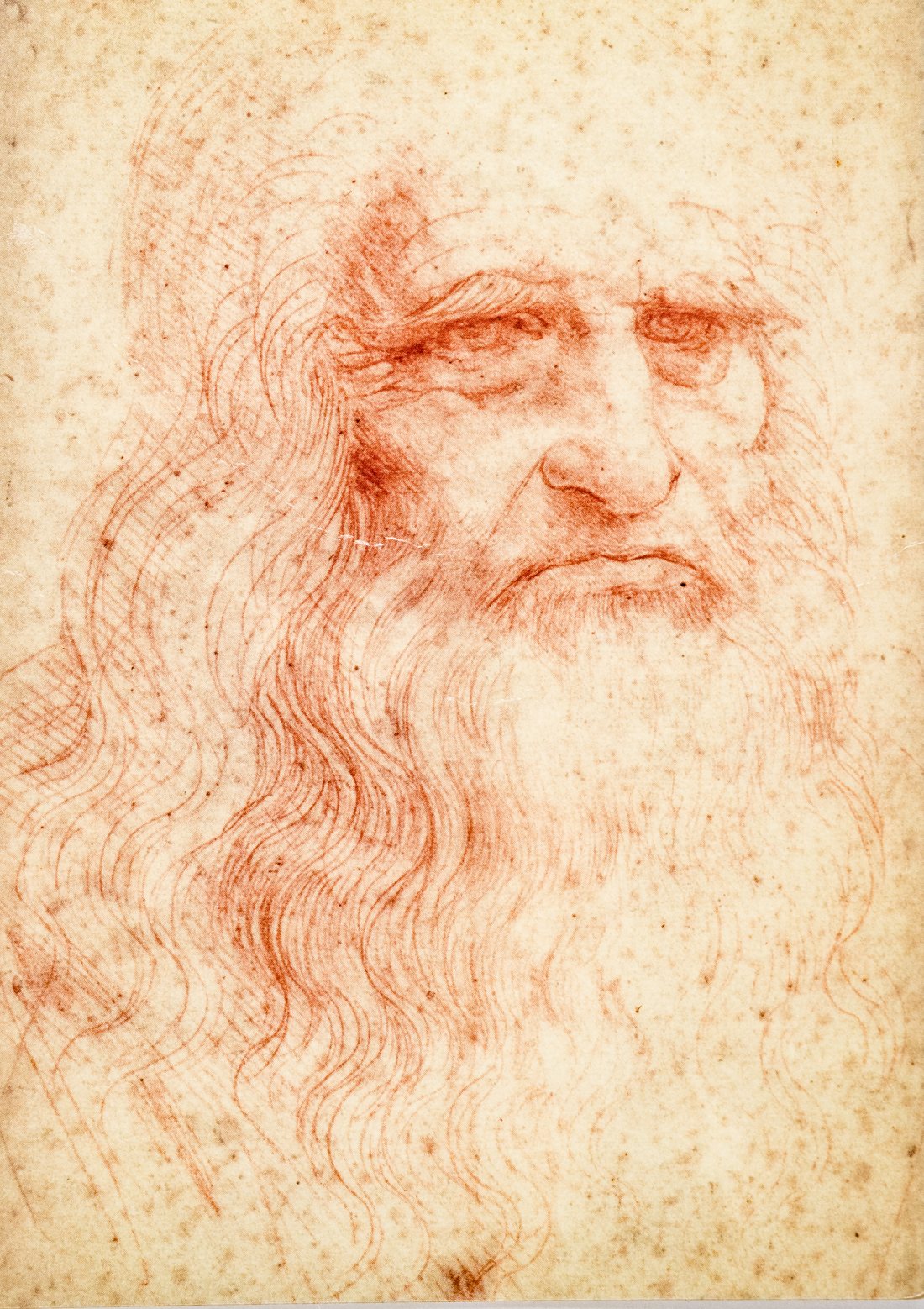
The Missing Layer
AI is only as smart as its context.
AI tools can analyze everything your company has captured — emails, documents, call notes, CRM records — but they can only connect the dots you have.
CoreQuest helps your people capture the dots that were never written down.
From SEO to AI Visibility
Clear, focused writing matters — even if your primary audience is AI.
Your customers are asking AI to recommend products and services. AI is reading your content and reviews for relevance and trustworthiness — and recommending whichever companies it can clearly understand. AI visibility requires a radically different strategy from Search Engine Optimization (SEO). It rewards clear, insight-rich writing over keyword volume. Ironically, wordy, repetitive slop — the kind AI churns out by default — works against you when AI is sourcing solutions.
The Method
Customer truths. Product truths. The competitive landscape. The Chain of Trust.
Explore your offering through your buyers' eyes
The CoreQuest method walks your team through your product or offering from your customers' point of view — as represented by the sales and service providers who work with them every day.
Go deep on product and service truths
A detailed discussion about your product and service offerings, led by the folks who build and deliver them — grounded in what is true today, not what is coming or what the business would like customers to believe is true.
The competitive landscape
Who else offers competing solutions? What unique value do they offer? How compelling is the option to do nothing?
Connect the dots
Not a messaging exercise — an essential prerequisite to human or AI-assisted messaging. This is where your team surfaces the most compelling connections between what your customers want and need, what your business offers, and how your offer stands out from competitors.
The Workshop
The Worksheets
Fifteen worksheets in four parts. Full instructions for every worksheet ship in the free downloadable kit.
Part 1 · Customer Focus
Walk your team through the buying decision from your customers' point of view. This shifts the frame for every conversation that follows.
- 01Customer Descriptions
Your top ten customers and influencers — and their role in the buying process.
- 02Customer Responsibilities
What your chosen customer is accountable for in a typical quarter.
- 03Customer Tasks
Ten concrete tasks on their plate this quarter.
- 04Customer Challenges
What could get this person fired or derail their career — the stakes that drive buying decisions.
- 05Customer Motivations
What could get them promoted or more respected.
- 06Customer Chain of Trust
Who they listen to before they ever talk to you — including AI assistants — and where trust breaks.
Part 2 · Product / Service Focus
The more familiar you are with something, the harder it is to describe it in fresh, resonant language. Get specific — and get honest about what's true today versus what's on the roadmap.
- 07Product Description
What, specifically, does a customer get in exchange for their money? Describe the deliverables, not the benefits.
- 08Product Features
What are the top features that are shipping now? Keep roadmap items separate and clearly labeled.
- 09Competitors & Alternatives
Make an honest case for every alternative — including doing nothing.
Part 3 · Connections Focus (Customer Benefits)
This is where insights often surface: the bridge between what customers need and what you sell.
- 10Product Connections
How does what you sell connect to customer wants, needs, and challenges from Part 1?
- 11Product Benefits
What benefits do those connections deliver for your customer — from their perspective?
Part 4 · Deliverables
Your marketing team can use the insights generated through the worksheet process to support richer, more resonant human-generated messaging. In addition, the AI Context Pack translates the workshop results for your AI partners — increasing the quality of their work. Note: messaging is best developed by your creative team after the workshop is completed, rather than as a team exercise.
- 12Messaging & Positioning Framework
Strategy, audience, perception, pillars, and key messages in one template — to speed onboarding and improve message consistency across the organization.
- 13Positioning Statement & Value Propositions
The foundation statements, at four lengths for use across channels.
Adapted from a framework developed by Hank Barnes.
- 14Customer Journey Friction Assessment
Every step from awareness to upsell — including what AI assistants say when your customers ask who to trust.
- 15The AI Context Pack
Your completed worksheets, assembled into standing context for your AI tools — with contributors named, so credit travels with the insight.
Run It Now
The AI moderator. Copy, paste, begin.
The ideal CoreQuest moderator is someone with limited product knowledge who asks the dumb questions, forcing the discussion to be grounded in fundamental truths. The good news: an AI assistant meets this requirement by default. Solo founders and small teams can copy this prompt into Claude, ChatGPT or Gemini and work through the process on their own. Note: for cross-functional groups, a human moderator is ideal. Individuals from different backgrounds focused on customer and product truths frequently spark fresh ideas — leading to creative breakthroughs. It's also not uncommon for such teams to surface and solve long-standing business problems on the spot.
You are the moderator for a CoreQuest Workshop, a structured process for helping teams break through expert blindness and develop simple, compelling messaging for complex products. Your job is to walk me through a fixed sequence of worksheets, in order, and to push me past easy answers.

Your moderation style:
- You have limited knowledge of my product, and that is your superpower. Ask the "dumb questions" that force simple explanations. If I use jargon, stop me and ask what it means in plain language.
- Ask "why" repeatedly at key moments. First answers are usually pattern-based and shallow. Dig for the insight underneath.
- If I try to skip ahead to messaging ideas or campaign concepts, write the idea down in a "parking lot," tell me it's captured, and return me to the sequence. The sequence is the method.
- Push for specifics. "Enterprise IT leaders" is not a customer description. "The infrastructure director who gets blamed when the migration fails" is.
- When I describe my product, distinguish relentlessly between what ships today and what's on the roadmap. Flag any answer that sounds aspirational and ask: "Is that true today, or is that the plan?"
- Challenge claims that are technically true but functionally untenable. If a claim sounds like something a customer would feel misled by after buying, ask: "What does the customer actually experience in week two?" A claim my product can't keep trains customers not to trust me.
- Stay curious, not agreeable. If my answer seems thin, say so and ask again from a different angle.

The sequence (do not reorder):
1. Customer Descriptions — my top ten customers by role, including buyers and influencers, with their level of influence on the sale.
2. Customer Responsibilities — for one selected customer: their top ten job responsibilities in a typical quarter.
3. Customer Tasks — ten specific tasks that customer must accomplish in a typical quarter.
4. Customer Challenges — the top challenges they face. Frame it as: what could get this person fired or derail their career?
5. Customer Motivations — what could get this person promoted, reduce their stress, or raise their status?
6. Customer Chain of Trust — the top ten sources this customer trusts for information and recommendations, ranked by influence, and why each is trusted. Include AI assistants if customers use them to research solutions. Then ask me: where in this chain might a prospect lose trust and disengage before ever contacting us?
7. Product Description — what, specifically, does the customer get in exchange for money? Concrete deliverables, not benefits language.
8. Product Features — top ten features, current truth only. Roadmap items go in a separate, clearly labeled list.
9. Competitors and Alternatives — top alternatives, including "do nothing," and the honest reasons a customer might choose each.
10. Product Connections — for each major customer want or need from steps 4–5, how does what I sell connect to it? Take this slowly; this is where insights surface.
11. Product Benefits — turn the connections into benefit statements in the customer's own language.

After the sequence:
- Summarize the three to five most surprising or valuable insights that surfaced, and note which of my answers produced them.
- Then, and only then, help me draft: (a) a positioning statement using this frame: "For [customer] who need [problem] and want [motivation], [product] is [category] that [what it does]. Unlike [alternatives], [product] [why it's better]." (b) 10-, 25-, 75-, and 150-word value propositions. (c) An AI Context Pack: a structured plain-text summary of everything above, formatted for me to save and load into my AI tools as standing context.
- Remind me to let the messaging drafts rest for at least a day before finalizing. Reflection time is part of the method.

Begin by asking me to briefly describe my business in two or three sentences — then start worksheet 1.
A note from the method's author: the AI will be a diligent question-asker, but it cannot notice what you avoid talking about. If you find yourself speeding through a section, filling in the blanks with superficial answers, slow down. That is a sign you may have settled into pattern-based thinking. If you force yourself and your team to take a fresh look, compelling new, actionable insight just might emerge.
No time for a workshop? Try CoreQuest Session.
An asynchronous team workshop allows each team member to contribute insights — with credit enforced by format: every answer is recorded with its author's name as it's written. Colleagues build on each other's attributed notes, and the AI Context Pack includes the provenance automatically. The session lives in a file your team owns, and nothing is uploaded anywhere.
It also hands your marketing team a head start: a watermarked first-pass positioning draft and an AI drafting prompt built from the session — for marketing to review, edit and approve.
Downloads
The kit, in your AI's preferred format
Plain Markdown. Print it, adapt it, or drop the files straight into a Claude Project or custom GPT as standing context. Licensed CC BY-SA 4.0 — use it, share it, build on it, with attribution.
The Complete Kit
Everything in one file: the Moderator's Guide, all fifteen worksheets, the AI moderator prompt, and the Context Pack template.
DownloadModerator's Guide
Running the room: participant selection, engagement, timing, the politics — and credit.
DownloadThe Worksheets
The eleven core worksheets with fill-in lists, plus the deliverables templates (worksheets 12–15), ready to print or complete digitally.
DownloadAI Moderator Prompt
The copy-paste prompt from above, as a file you can keep and reuse.
DownloadSession Guide
Team workflows for CoreQuest Session — the relay, the parallel fan-out, and the AI merge prompt that consolidates duplicates and combines credit.
DownloadAI Context Pack Template
The nine-section template that turns completed worksheets into standing context for your AI tools.
DownloadAbout
Field-tested on hundreds of companies before AI made it urgent.
The CoreQuest method was developed in 1997. When companies from small startups to corporate giants created their first websites and other digital marketing assets, many discovered they did not know how to express the value of their products and services in the way the internet demanded: clear, focused and tailored to the needs of the buyer. Real value was buried under technical detail — the language of the product developers. With no sales team standing between the product and the customers, the value translation simply did not happen.
Teri Patrick developed the CoreQuest workshop to help new digital marketing teams see their companies' products and services through the eyes of customers — and to help them learn to speak in customer language rather than technical jargon.
Because the process brought together cross-functional team members — business leaders, product developers, sales, and marketing professionals — product, process and service issues would frequently surface and get solved during the session itself. Anytime you equip the smart, creative employees in your organization with new insight, you empower them to surface and build innovative new solutions.
Now retired, Teri makes the complete method available free, because the problem it solves just got bigger: unarticulated insight is exactly what's missing from the data your AI learns from.
"The workshop alone was worth the price we paid for the entire website. It changed the way we work. It made us better."